
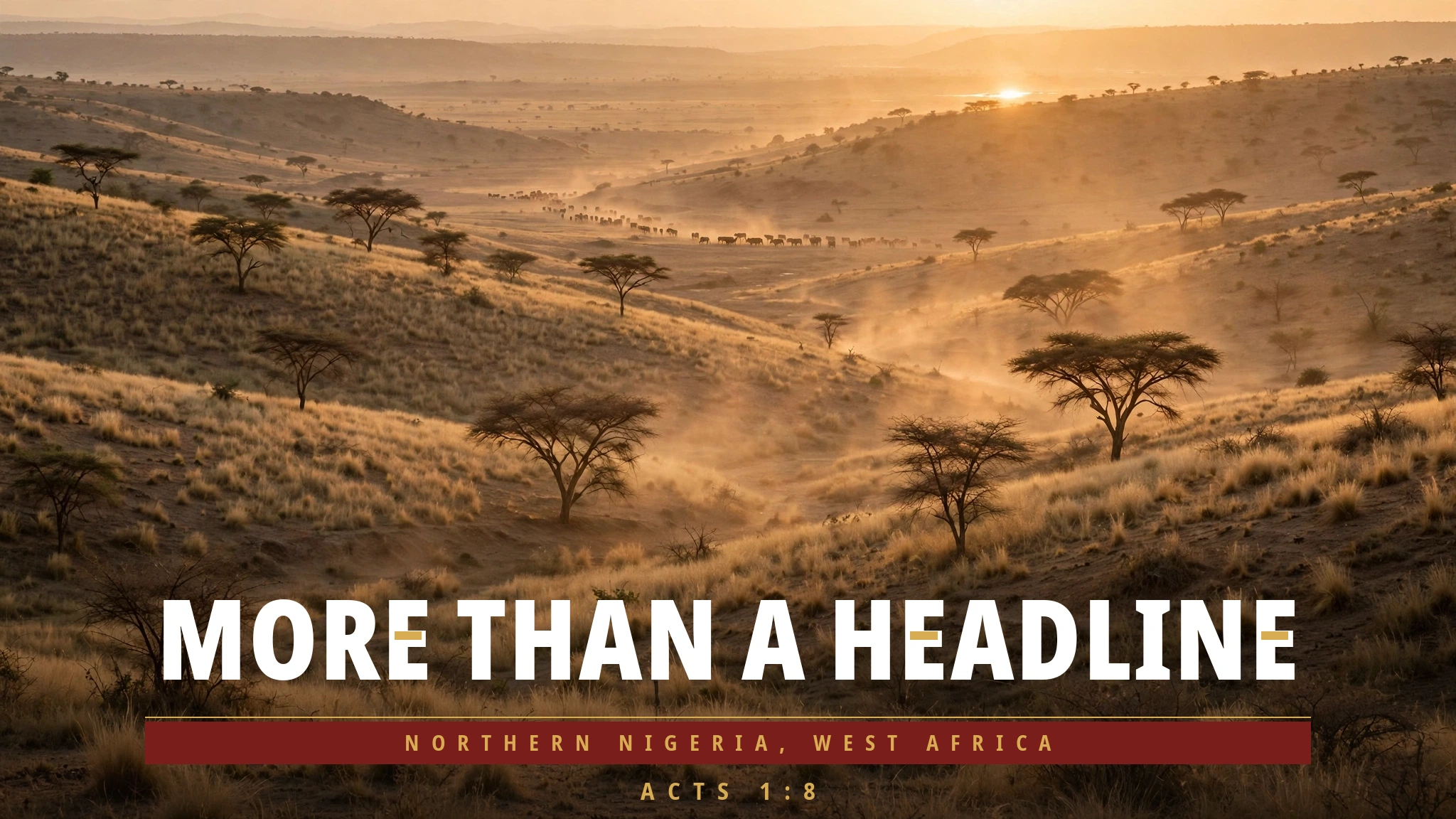
Last Saturday, Fulani representatives travelled from across Jigawa State to a meeting hall in Dutse. They came to talk about the ordinary things a people’s future is made of: healthy cattle and better breeds, watering stations for the dry season, grazing reserves, vaccinations, and how farmers and herders can live at peace on the same land.
It was not the kind of gathering that makes international headlines. When the wider world hears the name “Fulani,” it usually hears it inside a story about conflict. But sit with that hall in Dutse for a moment, and you see what a headline cannot hold.
Behind the name is a people.
A people, before a statistic
The Fulani are one of the great peoples of West Africa, spread across the Sahel in many nations — herders, teachers, traders, mothers, elders, children. The U.S. Commission on International Religious Freedom puts their number in Nigeria alone at about 14.5 million. Of that vast people, the same source estimates roughly 30,000 are active in militant groups. The overwhelming majority of Fulani are neighbours — raising cattle and children, looking for water and pasture, hoping for peace — known to the world almost entirely through a tiny, violent fraction.
Joshua Project lists the Nigerian Fulani among the largest unreached peoples on earth: primary language Nigerian Fulfulde, primary religion Islam, evangelical believers estimated at somewhere between a tenth of one percent and two percent. There is a New Testament in their language. That matters, and it settles nothing by itself. A translation that exists is not the same as a witness who is present, a family that has heard, a church that endures. We have learned to say that plainly in Operation 326, because people deserve honesty: resources, contact, and presence are three different things.
So the question is the one we keep asking: who is still waiting — and who will they hear it from?
Schools first, and teachers who become family
One answer is being written in northern Nigeria by an outreach called Across Nigeria, and Baptist Press told its story this month.
Brad Brandon, its founder, began by building schools — deliberately non-evangelistic schools — for Fulani children, many of whom cannot yet read in Hausa or in English. The teachers are trained not to preach to the students. Instead, they do something slower and stronger: they build close relationships with the parents, until, in Brandon’s words, they “almost become like part of the family, like an extended part of the family.” And it is through those relationships, he says, that a platform opens to talk about Christ.
Notice what the Fulani communities do in return. They value the education so deeply that they help protect the schools — and the ministry itself. The reached are becoming the guardians of the work. That is not a strategy imported and imposed. That is trust, earned family by family.
Most of Across Nigeria’s evangelists are themselves converts from Islam, working in places where following Jesus can carry a severe cost. Brandon reports that over thirteen years, some 7,600 Muslims have come to Christ through this work. Treat that number the way we treat every number — as the ministry’s own report, offered in good faith, not as an audited count. But even held carefully, the direction of the story is unmistakable.
The knock on the door
Last year, during the closing ceremony of a training conference for pastors in Maiduguri, there was a knock on the door. Outside stood six unarmed men from Boko Haram, wanting to learn.
Brandon’s team had a decision to make. His answer deserves to be quoted exactly as he gave it: “We felt like, if they’re here and they really want to learn and know, we don’t want to hinder them. That’s why we’re there, is to get the Gospel out. So we let them in.”
All six came to Christ.
And among the ministry’s evangelists today is a former Fulani militant — a man who once belonged to the violent story — now described as a gifted evangelist who travels widely: recently in Chad, and earlier this year in Niger, helping to start a church. The reached have become the senders. A Fulani believer is carrying the Gospel to Fulani communities across borders, in his own language, inside his own culture, in a way no outsider ever could.
That is Karl’s conviction, and it is the pattern of Scripture: God does not merely send people to a frontier. He raises witnesses from it. Our calling is not to control that work. It is to recognise it, honour it, resource it, and release it.
Jerusalem, Judea, Samaria — and the Sahel
Acts 1:8 moves in widening circles: Jerusalem, Judea, Samaria, the ends of the earth. In northern Nigeria those circles overlap in a single story. A school in a Fulani village is Jerusalem — near, relational, daily. A Fulani evangelist crossing into Niger and Chad is the ends of the earth — carried not by a foreign team, but by a son of the very people still waiting.
Every person has a birthright to hear the Gospel at least once. That includes the herder walking his cattle at dawn, the mother weighing whether this school can be trusted, the community leader who travelled to Dutse last Saturday to argue for water and peace. They are not a headline. They are not a statistic. They are people God knows by name — most of whom have never once heard the name of Jesus from someone they trust.
What can we do now?
Pray — for the teachers in those schools and the parents they have come to love; for Fulani evangelists travelling to Chad, Niger, and beyond; for the six men who knocked on a door, and for every believer in northern Nigeria following Jesus at real cost.
Send and give — work like this is carried by ordinary senders: schools built, teachers trained, Scripture carried in Fulfulde. A supporting church in Alabama helped build one of those schools. Presence that patient is never an accident; somebody sent it.
Adopt — let a church or small group carry the Fulani in regular, named prayer, the way we adopt any people still waiting — not as a project for a month, but as a people to love for years.
Go and engage — some reading this will go. More of us can begin nearer: refuse to let a headline be the only story you know about a people. Learn names. Ask who in your own city has come from the Sahel. The frontier is not only far away, and it is never only a category.
Last Saturday in Dutse, a people gathered to plan for water, cattle, and peace. This week, in villages most of us will never see, some of their own are carrying them a greater hope. The world may know the Fulani by a headline. Heaven knows them by name.
Every person has a birthright to hear the Gospel at least once.
One Mission. One Movement. One Chance.
Karl Hargestam
Global Missions Director, Pentecostal Church of God
Research sources: Baptist Press (October 14, 2026), “Boko Haram, Fulani militants become Christian evangelists through north Nigeria outreach” — Across Nigeria’s schools model, teachers becoming like family, the six men at the door in Maiduguri, and the former Fulani militant now evangelising in Chad and Niger; Northern Nigerian Express and NatureNews Africa (October 17–18, 2026) — the Jigawa Fulani community gathering at Dutse; Joshua Project — Nigerian Fulani language, religion, and resource data. Population figures differ by source and are attributed in the text; ministry-reported fruit is labelled as reported. Featured image: branded Operation 326 editorial illustration in Valley mode — a Sahel valley at golden hour. It is contextual artwork and does not depict a named community, person, or ministry activity.
Leave a Reply