“You will be my witnesses…to the ends of the earth.” — Acts 1:8
Completion is not a distant theological idea. It is an assignment—and every week, careful research is bringing that assignment into sharper focus.
The latest Operation 326 daily intelligence briefings do not announce a dramatic new list of people groups marked “Reached.” That may sound less exciting at first. In reality, it is one of the most important advances we can make: we are learning to identify the remaining peoples with greater precision, protect the integrity of every status decision, and show the Church where prayer, pioneers, language work, and partnership are still truly needed.
We are not simply counting names. We are moving closer to the ends of the earth with our eyes open.
Acts 1:8 requires both urgency and accuracy
Jesus gave the Church a geographic and spiritual movement: Jerusalem, Judea, Samaria, and the ends of the earth. The direction is outward. The power comes from the Holy Spirit. The goal is witness where Christ is not yet known.
Urgency matters—but urgency without accuracy can send resources to the wrong place, confuse one community with another, or declare an assignment finished before a people has actually received a credible Gospel opportunity. Operation 326 therefore treats research as part of obedience. Before we can responsibly say that a people has been engaged or reached, we must be confident that we know which people we mean.
The public Operation 326 research inventory remains our working source of truth. It organizes peoples by region and country, records current reached or unreached status, identifies groups with pioneers ready to go, and invites field updates. The new intelligence process strengthens that foundation by cross-checking names, languages, countries, and external identifiers.
Finding one: the same name does not mean the same assignment
This week’s research highlighted why country-specific identity must be preserved.
The Operation 326 inventory lists the Arem in Laos as Reached and the Arem in Vietnam as Unreached. It also lists the Lachi in China as Unreached and the Lachi in Vietnam as Reached. These differences cannot be automatically erased simply because the communities share a name or language relationship.
Borders matter operationally. Access differs. Churches and workers may exist on one side of a border but not the other. Political realities, trade languages, migration, and community relationships can all affect whether the Gospel is genuinely accessible.
External evidence also creates important questions. Joshua Project’s current Lachi profile for China reports no known focused Christian witness and describes the population as living across China and Vietnam. Its Lachi language-resource page lists translation work as started but no audio Bible, Jesus Film, or Gospel recordings. That does not automatically settle the O326 country statuses. It tells us exactly where the next evidence audit should concentrate.
This is progress: not a premature reversal, but a clearer verification question.
Finding two: broad names can conceal several peoples
The daily intelligence system has also flagged Pashayi for subgroup review. “Pashayi” can function as a broad label across several distinct language and community identities. If one broad O326 entry maps to multiple external people records, a single reached or unreached status may hide important differences.
The right response is not to force a quick match. It is to determine whether the record should be divided into country-specific or language-specific subgroups, each connected to the correct PeopleID and ISO language code.
This is why every O326 record is now moving toward a four-part identity lock:
- a recognized people-group identifier;
- an ISO 639-3 language code;
- a country-specific subgroup;
- a separate taxonomy-confidence assessment.
Only after the identity is secure should evidence about believers, churches, Scripture, audio, Gospel films, workers, or engagement be used to recommend a status change.
Finding three: similar names may be distinct peoples
Bonan and Tongren Bonan have been flagged as distinct records even where language relationships overlap. Samatao and Samtao remain under evidence review because nearly identical spellings can either represent a duplicate, a historical spelling difference, or genuinely separate peoples.
Names alone are never enough.
The new rule is simple: never merge records because they look alike. Verify country, language, geographic distribution, outside identifiers, ethnonyms, and source history. This protects the people represented in the data and keeps the Church from mistaking a database cleanup for Gospel completion.
Finding four: resources are increasing, but access must be proven
The August 20 daily briefing is tracking a global Scripture baseline of 4,167 languages with Scripture, 4,440 with work in progress, and 522 still awaiting work. These numbers point to tremendous progress across the worldwide Bible-translation movement—and to a remaining gap that still demands prayer, investment, and sending.
But the presence of a New Testament, audio recording, or Gospel film does not by itself prove that a particular people has been reached. A resource may exist in a language that only part of the community understands. Distribution may be blocked. Literacy or media access may be limited. A translation may serve a related language rather than the heart language.
Resources are evidence of opportunity. Completion requires credible access, witness, and a pathway toward discipleship and indigenous church life.
No new “Reached” declarations—and that is good news
The current research cycle recommends no new Reached declarations. It also recommends no automatic reversals of existing O326 statuses.
Instead, discrepancies are being moved into an evidence-audit process. Historical names and decisions are preserved. New sources receive dates and confidence levels. Taxonomy confidence is kept separate from evidence confidence. Sensitive field verification—especially worker identities, exact locations, routes, and contacts—remains private.
This discipline makes every future completion declaration stronger. When we celebrate that a people has received a witness, we want that celebration to rest on evidence worthy of the people, the Church, and the assignment Jesus gave us.
Closer than yesterday
Operation 326 exists because every person has a birthright to hear the Gospel at least once. Our task is not to possess a list or protect a number. It is to finish the assignment.
Each corrected identity, confirmed language, resolved duplicate, verified resource, funded pioneer, and trusted field report moves us closer. Research becomes prayer. Prayer becomes sending. Sending becomes witness. Witness becomes indigenous discipleship and church multiplication.
Acts 1:8 is still moving outward.
The ends of the earth are not an abstraction. They are peoples with names, languages, stories, and an eternal right to hear. As the picture becomes clearer, so does our responsibility—and so does our hope that the remaining assignment can be completed.
One Mission. One Movement. One Chance.
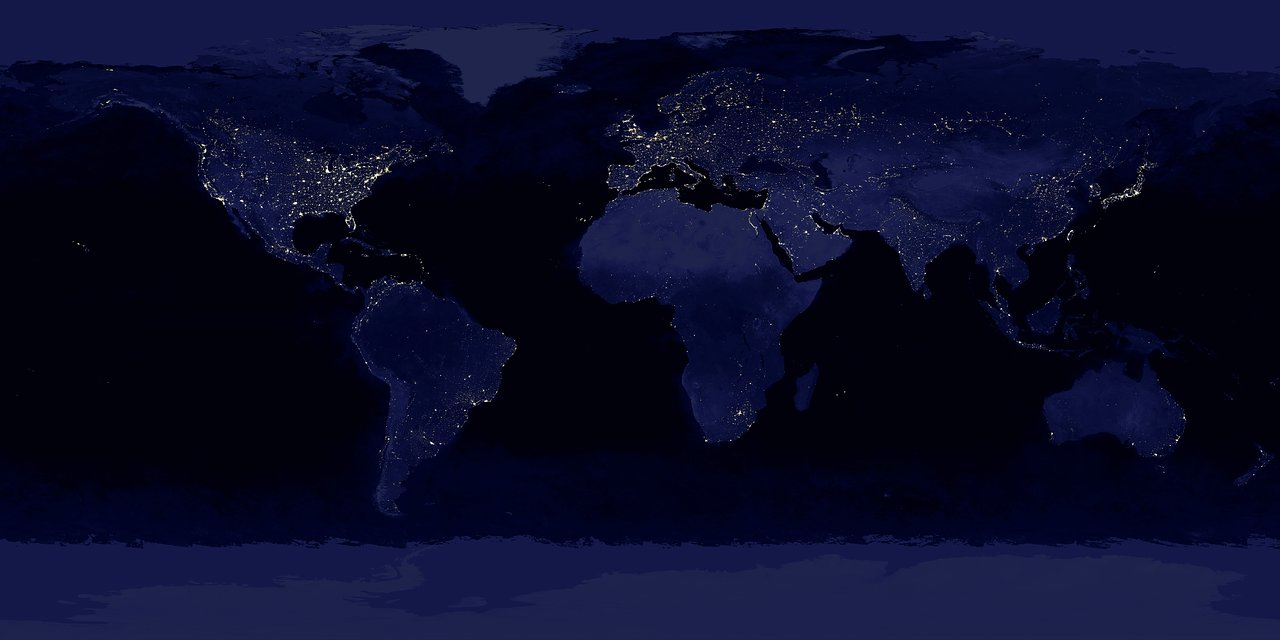
Featured image: Earth at night, NASA/Goddard Space Flight Center Scientific Visualization Studio, via the European Southern Observatory. Used as a contextual global image; it does not depict a specific people group.