“You will be my witnesses…to the ends of the earth.” — Acts 1:8
Completion begins with a clear question: who has truly received a witness?
That question sounds simple until one name appears twice, in two countries, with two different mission statuses. This week’s Operation 326 research brings us to the Boor records in Chad and Mali. The discovery is not a dramatic declaration that another people has been reached. It is something more foundational: a reminder that we cannot finish the Acts 1:8 assignment responsibly unless we know exactly which people each record represents.
Every line in a mission database represents human beings, not merely a name or number. If the identity is wrong, prayer may be misdirected, resources may follow the wrong trail, and a people may disappear behind a false sense of completion.
Two rows, three research questions
The OCFEP Operation 326 research inventory, our working source of truth, currently contains two entries named Boor. The Chad entry is marked Reached. The Mali entry is marked Unreached.
That immediately creates three separate questions:
- Do the Chad and Mali rows describe the same ethnolinguistic people?
- What evidence supports the different country statuses?
- What Gospel and Scripture resources are actually available in the Boor language?
Those questions must not be compressed into one decision. Identity comes first. Country-specific evidence comes second. Only then can a reached or unreached status be reviewed responsibly.
What the identity controls verify
Joshua Project’s current Boor profile connects the Boor in Chad to PeopleID3 10945 and the language to ISO 639-3 code bvf. Its present population figure is approximately 300, but that should be treated as a research estimate rather than an exact census.
Glottolog independently identifies the Boor language with Glottocode boor1242 and ISO bvf. It lists Chad as the country connected to this language. Joshua Project likewise says the people have only been reported in Chad and currently carries one primary-language country record.
This gives the Chad record a strong identity lock:
- PeopleID3: 10945
- ISO 639-3: bvf
- Country: Chad
- Taxonomy confidence: high for the Chad people-language match
The Mali row does not yet have the same verified crosswalk. No current external record reviewed in this cycle ties PeopleID3 10945 or ISO bvf to Mali.
That absence is not proof that the OCFEP Mali entry is wrong. It could represent a different people with a similar name, a historic alternate name, a migration report not reflected in public sources, or a legacy mapping that needs correction. The responsible conclusion is therefore not deletion. It is unresolved identity, low taxonomy confidence, and a priority provenance audit.
A status difference that deserves evidence
The country identity question is only one part of the finding. OCFEP currently marks the Boor in Chad as Reached, while Joshua Project marks PeopleID3 10945 in Chad as Unreached.
Both statements are verified as current database labels. Neither label, by itself, settles the field reality.
A difference between sources is not a reason to choose the newest-looking answer or automatically reverse an existing decision. It is a signal to recover the evidence behind each conclusion. Was the OCFEP status based on a trusted field report, an initial Gospel visit, a known believer, a fellowship, or evidence of an indigenous church? Does the Joshua Project assessment rely on older estimates or a different threshold?
Until those questions are answered, Operation 326 should preserve the historic OCFEP status, retain the external discrepancy, and assign a status-confidence flag for review. This protects both urgency and honesty.
Translation started is not the same as access
The current Joshua Project profile says that Bible translation has started for Boor. Yet its language-resource inventory lists no reported Scripture portions, New Testament, complete Bible, audio Bible, Jesus Film, or Gospel recordings.
Those two facts can both be true. A translation project may be in an early stage, may not have released material, or may not yet be reflected in public catalogues. But they lead to a crucial completion question: what can a Boor-speaking person actually receive, hear, understand, and share today?
Glottolog also flags the language as possibly severely endangered or moribund, while clearly noting low confidence in that assessment. That warning should not be sensationalized. It should accelerate careful verification. When a small language is under pressure, the window for heart-language documentation, oral Scripture, storytelling, and trusted local participation can narrow quickly.
Resource existence, resource availability, Gospel witness, discipleship, and indigenous church life are five different indicators. None should be used as a shortcut for the others.
Verified facts, inference, and what we are not claiming
Verified: OCFEP currently carries Boor entries for Chad and Mali with different statuses. Joshua Project connects PeopleID3 10945 and ISO bvf to Chad and currently labels that country record Unreached. Glottolog also associates ISO bvf with Chad. Public resource listings report translation activity but no accessible Boor Scripture or major Gospel media.
Inference: the Mali entry may represent a separate identity, an unsupported cross-border extension, or a legacy taxonomy problem. The Chad status difference may result from different evidence dates, definitions, or unpublished field information.
Not concluded: this research does not delete the Mali row, reverse the Chad status, declare that no Christian witness exists, or disclose any field contact, worker, route, or precise community location.
The next step toward completion
The right response is a focused, non-sensitive evidence audit:
- Recover the original source and date for both OCFEP Boor records.
- Identify the intended Mali people through names, language, country history, and external identifiers.
- Verify the evidence behind the OCFEP Reached status in Chad using current, trusted sources.
- Confirm the present stage of Boor translation and whether any oral, written, or audio material is safely available.
- Score identity confidence, resource access, witness, and indigenous church evidence separately.
This is how research serves the Great Commission. We do not protect a number at the expense of truth, and we do not erase historic fruit because another database disagrees. We follow the evidence until the people behind the record are seen clearly.
Acts 1:8 moves outward to the ends of the earth, but completion is never abstract. It reaches people with names, languages, histories, and an eternal right to hear. Sometimes moving closer begins with a team crossing a frontier. Sometimes it begins with the humility to pause over two database rows and ask whether we truly know whom they represent.
Accuracy is not the enemy of urgency. It is what keeps urgency aimed at the unfinished assignment.
One Mission. One Movement. One Chance.
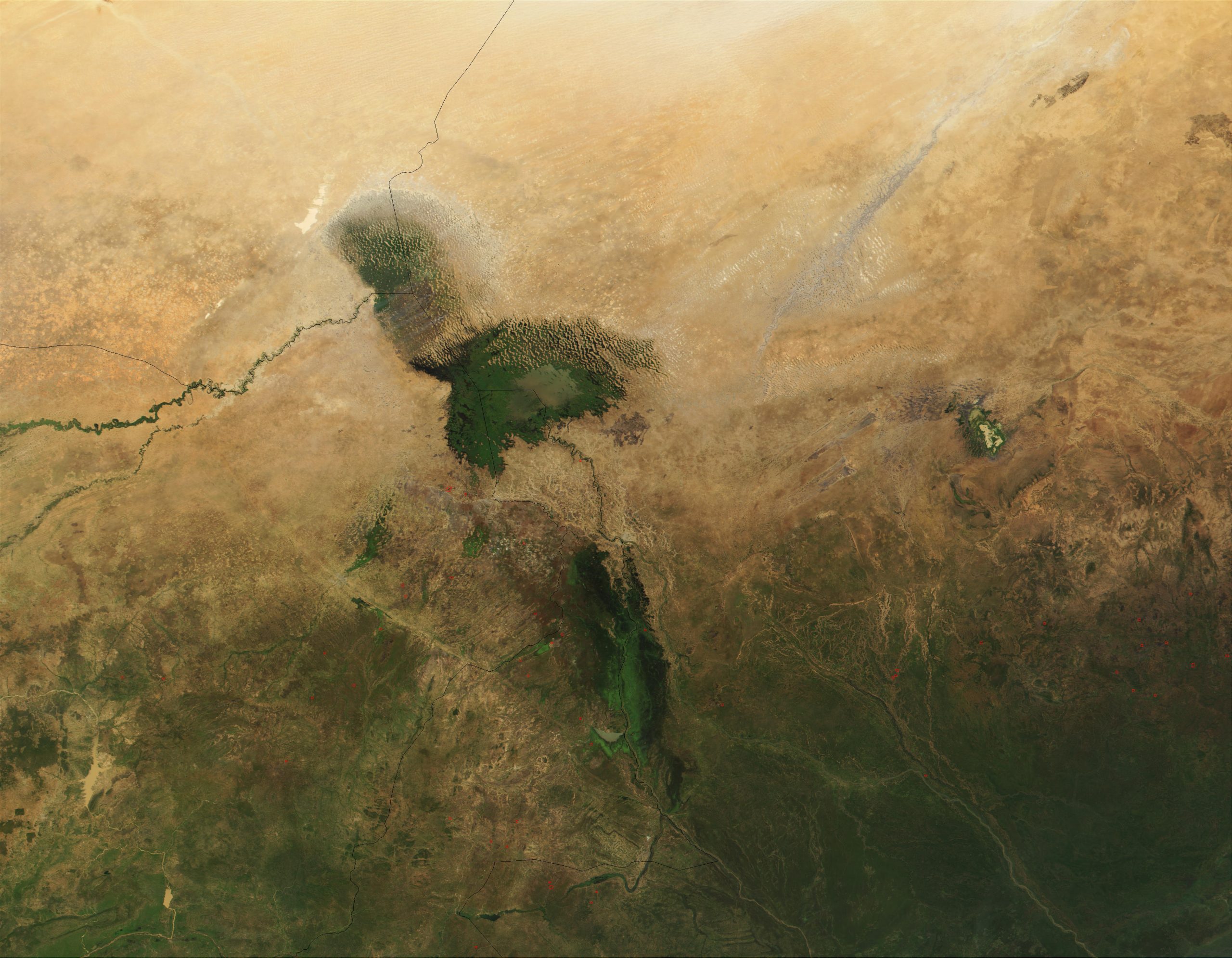
Featured image: Regional satellite view of the Lake Chad basin. NASA Earth Observatory, public domain. Used for broad geographic context only. It does not identify the Boor community, its location, or any ministry activity. Image source.